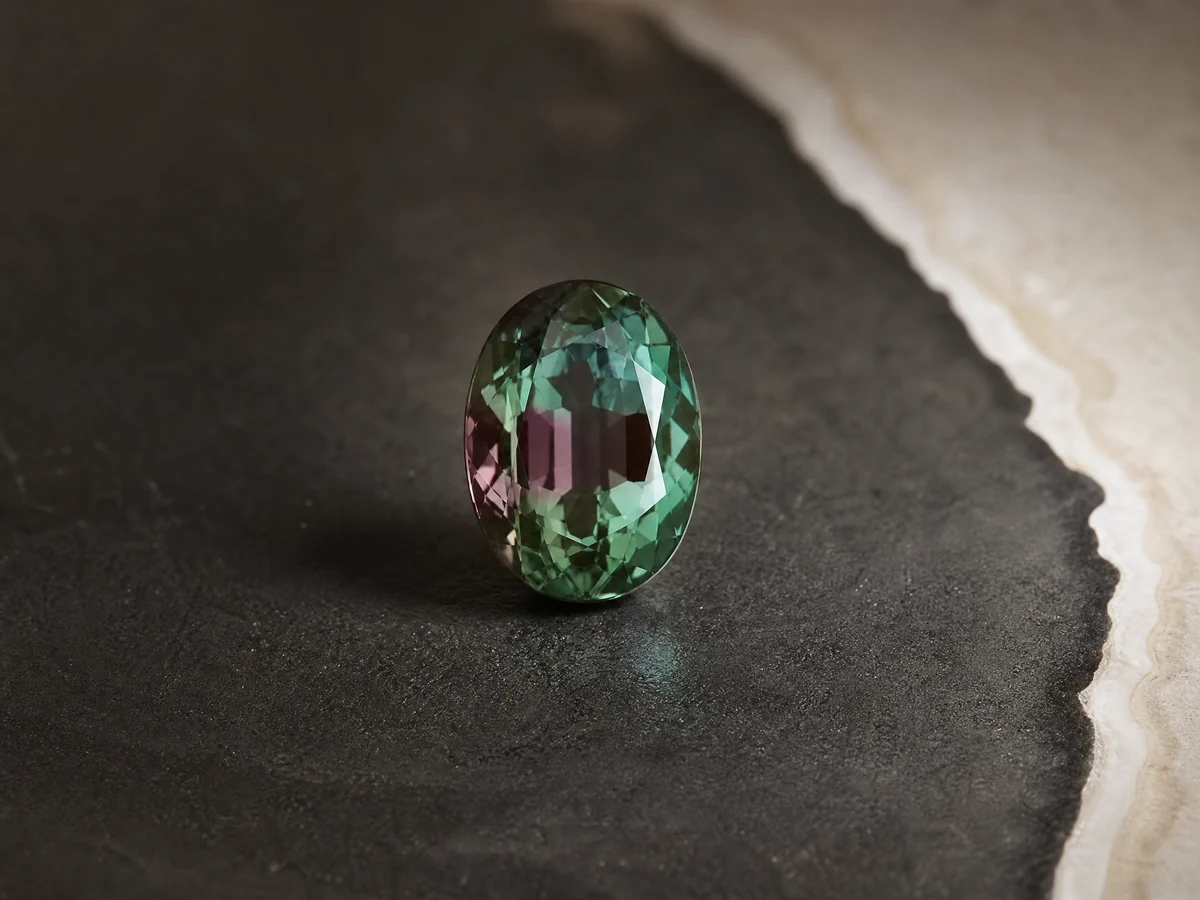
Understanding Alexandrite before you source.
Alexandrite is the color-change variety of chrysoberyl, admired for a visible shift between daylight and warmer light sources. Each stone should be assessed in controlled lighting and with transparent report context.
Color & appearance
Greenish to bluish-green shifting toward reddish or purplish tones
Origins & sourcing context
Brazil, Sri Lanka, East Africa and Russia are important sources.
Treatment & disclosure
Natural versus laboratory-grown status and color-change description must be clearly stated. Ask for suitable documentation on significant stones.
Care & setting
Alexandrite is durable for regular wear, but all fine stones benefit from protective settings and careful cleaning.
Buying guidance
Assess the strength and attractiveness of color change, daylight color, incandescent color, clarity, cut and laboratory documentation.
Documentation is matched to the individual stone.
Where available, independent laboratory reports can support identification, treatment disclosure and other documented observations.
Laboratory names are shown for educational context only. Global Gem Source is not affiliated with these laboratories, and no certificate is implied unless it is specifically documented for the individual product.